
Solar Panels
Solar panels can generate some of the electricity your heat pump uses, especially in spring and autumn.
Explore solar panelsHeat Pumps · Locally installed
Air source heat pumps designed around your home’s heat loss, your radiators and the way you like to live. Surveyed and installed by our own engineers, with plain answers on suitability.
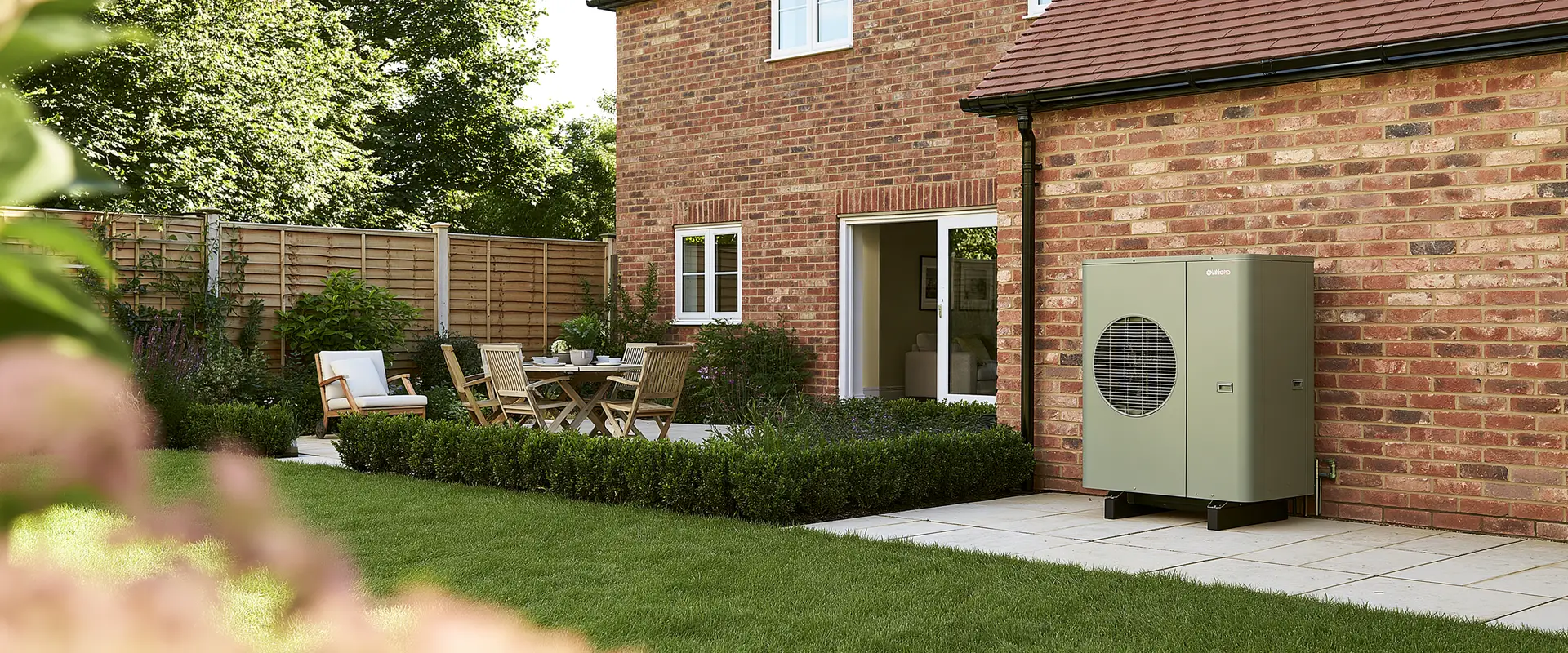
An air source heat pump draws warmth from the outside air — even on a cold day — and concentrates it to heat your radiators and hot water. It runs on electricity, but rather than burning fuel it uses that electricity to move heat, which is why a well-designed system can be so efficient.
The feel is different from a boiler. Instead of short, hot bursts, a heat pump usually runs for longer at lower temperatures, keeping rooms at a steady, gentle warmth. For properties with suitable land, a ground source heat pump is the alternative; whether that makes sense is something we assess at survey.
Greater Lincolnshire
Housing across Greater Lincolnshire is wonderfully varied: Victorian terraces in the towns, 1930s semis along the older main roads, post-war bungalows, and farmhouses and cottages scattered through East Lindsey, West Lindsey and South Holland. Each asks something different of a heating system.
Many rural homes sit beyond the gas network and rely on oil or LPG. Those off-gas-grid properties are often where a heat pump makes the most noticeable change, removing fuel deliveries and the tank in the garden.
Older homes are not automatically ruled out. Solid walls, draughty sash windows and small radiators all need thought, but with a careful survey — and sometimes insulation or radiator upgrades first — many older properties can be made to work well.
It starts with a survey
A heat pump is only as good as its design, so our survey goes room by room. We measure, ask questions and look at the whole system before suggesting anything.
All installation is carried out by Townsend’s own engineers.
Costs, grants and support
The honest answer is that it depends on the property. Heat loss, the size of unit needed, radiator changes, the hot-water cylinder and pipework all shape the price. After the survey you receive an itemised quote that sets out each element clearly.
People often ask about heat pump grants and air source heat pump grants, and what a heat pump costs after a government grant. Government grants towards heat pump installation exist for eligible homes in England and Wales through the Boiler Upgrade Scheme; applications are made by MCS-certified installers. We’ll explain the current position for your installation at survey.
Running costs depend on your home’s heat loss, insulation, electricity tariff and how you use your heating. VAT relief may apply to qualifying installations, subject to current rules and eligibility — confirmed at quote.
How it works
Four stages, so you always know what happens next. The design stage is where most of the thinking happens, and we take the time to get it right before any equipment is ordered.
A room-by-room heat-loss assessment, plus a look at your radiators, hot water and outdoor space.
We size the heat pump and radiators to your home’s heat loss and explain the running temperatures.
Your itemised quote, set out clearly. Nothing is ordered or booked until you’ve accepted it.
Our own engineers fit the outdoor unit, cylinder and controls, commission and balance the system, and show you how it all works.
Looking after your system
Like any heating system, a heat pump runs best with regular attention. Heat pump maintenance needs vary with the model and how the system is used, and some manufacturers make servicing a condition of their warranty — we’ll explain what applies to yours and quote after the survey.
Common questions
They suit different situations. A gas boiler burns fuel to make heat quickly; a heat pump moves heat using electricity and works best running steadily at lower temperatures. Which is better for you depends on your home’s heat loss, your radiators, your tariff and your priorities. A survey gives you a fair comparison rather than a sales pitch.
Outdoor units make a low hum from the fan and compressor, and the sound varies by model and how hard the unit is working. We choose a position with you and your neighbours in mind, away from bedroom windows where possible, and check the relevant noise rules as part of the design.
Often, yes, though some radiators may need replacing with larger ones. Heat pumps run at lower water temperatures than most boilers, so each room needs enough radiator surface to stay comfortable. Our room-by-room survey shows which, if any, would need changing.
Many older homes can be made to work well. Solid walls, single glazing and draughts raise heat loss, so the design has to account for them — sometimes with insulation or radiator upgrades first. We’ll be straightforward if your home needs preparatory work, or if a heat pump isn’t the right fit yet.
Yes. Air source heat pumps keep extracting heat from outdoor air well below freezing. Efficiency dips as the temperature drops, which is why the system is sized for a cold winter’s day rather than a mild one — and why good design matters more than the badge on the unit.
The Boiler Upgrade Scheme is a government grant towards installing a heat pump in eligible homes in England and Wales. Applications are made by MCS-certified installers, and eligibility rules apply to the property and its existing heating. Scheme details change, so we’ll explain the current position for your installation at survey.
Usually not. A correctly sized heat pump can provide all your space heating and hot water, and most installations replace the boiler entirely. In a few cases a hybrid arrangement is worth discussing. Your design will make clear which approach suits your home and why.
Some homes need work before a heat pump will perform well, and a few are not a good fit at all — for example, where there is no practical space for an outdoor unit, or where heat loss cannot reasonably be reduced. We would rather tell you that honestly than install a system that disappoints.
Works well together
Solar panels can generate some of the electricity your heat pump uses, especially in spring and autumn.
Explore solar panelsAir-to-air systems cool in summer and heat in winter — handy for rooms a radiator system serves poorly.
Explore air conditioningStart here
Choose heat pumps — and anything else you are considering — then answer a few questions about your home. We look at the whole home, not just the one system.
No pressure, no commitment — just a clearer starting point.
We install heat pumps across Greater Lincolnshire. Popular areas:
Your next step
Share your plans and a few details about your home. We’ll review them and come back to you.
Plan your upgrade